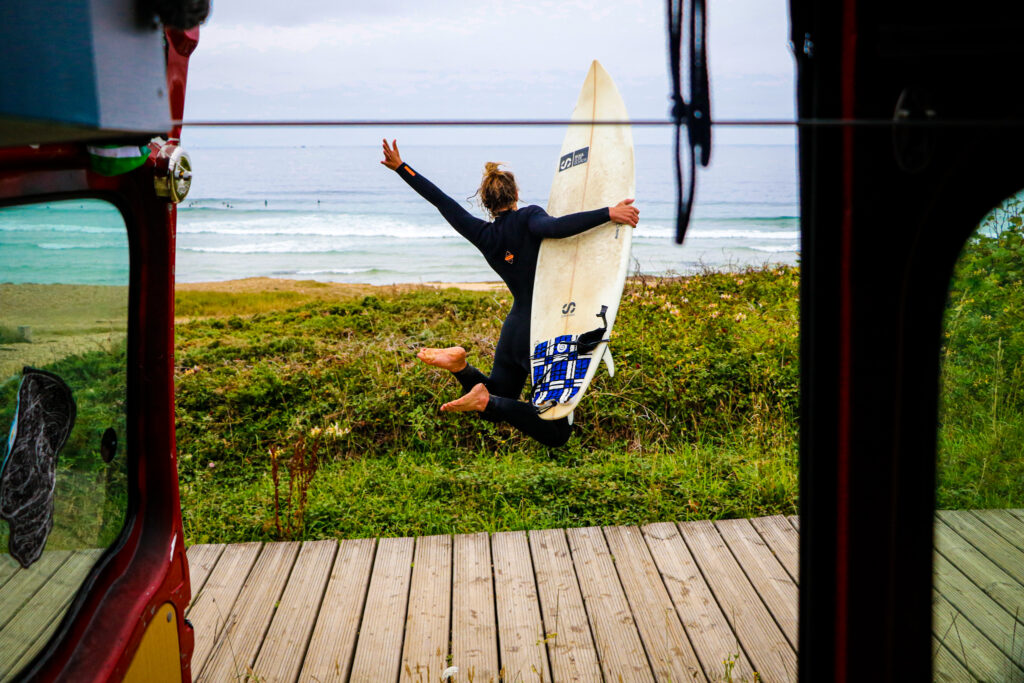
Thinking about moving to Spain, but not quite sold on the Mediterranean lifestyle? Here’s why moving to Cantabria might be worth a closer look and a few things you should know before making the move.
There’s a particular kind of person who ends up looking at Cantabria. Maybe you’re a surfer looking for somewhere you can actually catch waves before or after work. Maybe you’re a family dreaming of more outdoor time, a bit more space and a childhood that involves muddy boots rather than screens. Or perhaps you’re simply tired of the busy cities, scorching summers and increasingly expensive lifestyle that comes with some of Spain’s more popular destinations. Whatever brought you here, welcome. You’re probably in the right place.
We moved to Cantabria after spending several years in southern Spain. It wasn’t an impulsive decision. We spent about a year researching, visiting, scrolling through property listings, looking at maps and trying to figure out whether this green corner of northern Spain could actually become home. Spoiler: it did.
I actually wrote a little more about our decision in Moving to Cantabria, we did so on purpose, including why we chose this particular corner of Spain and what made us fall in love with it. But moving somewhere and visiting somewhere are two very different things. So I thought it was time to put together something a little more practical for anyone seriously considering making the move.


So, what is it actually like to live here?
And what should you think about before moving to Cantabria? First things first: Why Cantabria? Cantabria sits on Spain’s northern coast, between Asturias and the Basque Country. It’s a relatively small autonomous community, but it packs a surprising amount into its borders. Think green rolling hills, dramatic cliffs, sandy beaches, little fishing villages, mountain ranges and the Picos de Europa within reach. You can go surfing in the morning, have lunch in a traditional mountain village and be back home in time for dinner. And unlike some of Spain’s more popular coastal destinations, Cantabria hasn’t been completely transformed by international tourism. There is still a strong local identity, a relatively laid-back way of life and plenty of places where you’ll hear considerably more Spanish than English. For us, that was part of the appeal.
We wanted somewhere close to the ocean, with good surf, nature on our doorstep, a community and enough infrastructure to make everyday life work. We also wanted somewhere our daughter could grow up outdoors, with plenty of opportunities to explore. Cantabria ticked quite a few boxes.
Moving to Cantabria, but where should you live?
This is probably one of the most important decisions you’ll make, and one I wouldn’t rush. Although Cantabria is relatively small, different areas offer quite different lifestyles. Living in Santander is not the same as living in a small coastal village, and neither is remotely similar to settling somewhere in the mountains. Here are a few areas worth exploring.
Santander: City life with the beach nearby
If you like having restaurants, shops, cultural activities, schools and services close by, Santander is probably the most obvious starting point. It’s a beautiful coastal city with beaches, a harbour, a lively food scene and good connections to the rest of Spain. You get many of the conveniences of city life without living in a huge metropolitan area. It’s also worth considering if you have children and want access to a wider range of schools and activities, or if you need to commute regularly.


Somo, Loredo and the surrounding coastline: For the surfers and outdoor lovers
Okay, I might be slightly biased here. Somo and Loredo are particularly attractive if surfing is high on your priority list. With long beaches, consistent waves and a strong surf culture, this part of the coast has a lot going for it. The lifestyle is relatively relaxed, with a mix of local families, surfers, remote workers and people who have decided that being close to the ocean is more important than being close to a shopping mall. If surfing is one of the reasons you’re considering northern Spain, have a look at my article about surfing in Cantabria: riding the waves in northern Spain. The downside? It can be quite seasonal. Some businesses slow down or close during winter, and the quieter months are a very different experience from summer.


The western coast: Small towns and beautiful beaches
Further west, places such as San Vicente de la Barquera, Comillas and Cóbreces offer a different kind of coastal living. Think beautiful beaches, historic villages, green countryside and a slightly slower rhythm. There are plenty of opportunities to get outdoors, although you’ll want to consider access to schools, healthcare, work and everyday services depending on exactly where you settle.


Inland Cantabria: Mountains, villages and a slower pace
If you’re not particularly bothered about living right next to the beach, don’t overlook the interior. Cantabria has some beautiful rural areas, with traditional stone houses, mountain views and plenty of opportunities for hiking, cycling and exploring. You generally get more space and a different kind of community life. But do your homework: internet connectivity, transport, heating, access to services and winter conditions can vary considerably from one village to another.


My advice? Spend some time exploring different areas before deciding. A beautiful house on a sunny August afternoon can look rather different when you’re driving home in November rain.
The weather: Yes, it really does rain
Let’s get this one out of the way. Cantabria is green for a reason. Coming from southern Spain, we knew we’d be exchanging some sunshine for more rain. And while it hasn’t been quite as bad as we imagined, there is no point pretending that the climate is Mediterranean. Winters can be wet, grey days can stack up, and you’ll probably become very familiar with waterproof jackets, wellies and checking the weather forecast before making any outdoor plans. But there are upsides, too.
Summers are generally milder than in much of southern Spain, the countryside stays green, and you can spend much more time outdoors without feeling like you’re slowly melting. And when the sun comes out? It’s pretty spectacular. Just don’t move here expecting 300 days of sunshine. You’ll be disappointed.


What about working remotely?
If you’re planning to keep your current job, freelance or run your own business, Cantabria can be a lovely place to do it. There is generally good internet connectivity in towns and more populated coastal areas, although I’d always check the specific property before committing, particularly in rural locations. Santander has more options for coworking and professional networking, while places like Somo are gradually attracting more remote workers and entrepreneurs. That said, Cantabria isn’t a huge international digital nomad hub. You won’t find the same concentration of coworking spaces, networking events and international communities as in Málaga, Valencia or Barcelona. For some people, that’s exactly the point. For others, it might take a little more effort to build a professional and social network. And if you’re planning to work as a freelancer or set up a business in Spain, make sure you understand the administrative and tax implications before making the move. Being able to work remotely doesn’t automatically mean you can simply work from anywhere without considering your legal and tax situation. If you’re curious about what combining remote work and family life actually looks like, I’ve also written about the reality of being a remote-working parent.
Moving to Cantabria with children: Is it a good place to raise a family?
One of the things we appreciate most about living here is how much time our daughter spends outdoors. There are beaches, forests, mountains, playgrounds and little villages to explore. Childhood feels a little less programmed, with plenty of opportunities to get muddy, collect shells, climb things and generally come home covered in sand. We’ve also found that people are generally very welcoming towards children. Of course, there are practical things to consider when relocating with a family.
Schools: Cantabria has public, semi-private (concertado) and private schools. Depending on where you live, you’ll have different options. Research the school system, catchment areas, enrolment periods and language requirements before choosing a location.
Healthcare: Spain has a public healthcare system, but your eligibility and registration arrangements will depend on your residency and employment situation. It’s worth understanding how this works before you arrive.
Childcare: If you have younger children, look into local guarderías and early childhood education options. Availability and opening hours can vary.
Language: If your children don’t speak Spanish yet, don’t panic, but do be prepared for an adjustment period. Children generally pick up languages remarkably quickly, especially when they’re immersed in the language at school and in everyday life.
And one more thing: don’t underestimate how important it is for parents to find their own community, too. Having other families around who understand what it’s like to raise children somewhere new can make a huge difference.


Moving to Cantabria: the practical side: What do you actually need to organise?
This is probably the least exciting part of moving abroad, but also the part that deserves the most attention. Spain has its own systems, procedures and paperwork. And while some things are relatively straightforward, others can become rather time-consuming, particularly if you don’t speak Spanish. Here are some of the things you’ll need to look into.
1. Residency and immigration
Your requirements will depend on your nationality and circumstances. EU citizens generally have a different process from non-EU citizens, who may need to apply for an appropriate visa or residence permit before moving. You’ll likely come across terms such as NIE, TIE and empadronamiento. These refer to different things, and understanding what applies to your situation is important.
2. Finding somewhere to live
Are you planning to rent or buy? And do you want to be in the city, close to the beach or somewhere more rural? The property market varies significantly across Cantabria. Popular coastal areas and Santander can be competitive, and rental availability can be particularly challenging depending on the season. I’d recommend researching the market well in advance and, if possible, visiting properties and areas in person before making any big decisions.
3. Healthcare and insurance
Find out how you’ll access healthcare in Spain. Depending on your residency status, employment and circumstances, you may need private health insurance initially or on a longer-term basis.
4. Banking, taxes and administration
You’ll need to understand how to register locally, open a bank account if necessary, and deal with your tax obligations. If you’re moving from another country while continuing to work remotely, this is particularly important. Your tax residency may change, and you should get advice based on your own circumstances.
5. Learning Spanish
I can’t stress this one enough.
You can get by with English in certain international circles, but everyday life in Cantabria happens in Spanish. From talking to neighbours and dealing with local administration to making friends and getting involved in the community, speaking Spanish opens a lot of doors. You don’t need to be fluent before arriving, but making an effort really does matter.


A few things I wish someone had told me before moving
Having made the move ourselves, there are a few things I’d tell anyone considering it.
- Visit during different months. Seriously. Come in July and come in November or February. You’ll get a much better idea of what everyday life looks like.
- Don’t choose a house before choosing an area. Think about schools, supermarkets, healthcare, transport, work and your social life. A beautiful house in the middle of nowhere might not be quite as appealing six months later.
- Be realistic about work. If you need a local job, research opportunities before moving. Don’t assume you’ll find something immediately.
- Give yourself time to settle. Finding friends, building routines and feeling at home takes time. It doesn’t happen overnight.
- Expect a few surprises. Some will be wonderful. Others will involve paperwork, unexpected appointments and wondering why a seemingly simple administrative task requires three different documents.
And perhaps most importantly: don’t expect Cantabria to adapt to you. The more willing you are to embrace local life, the more rewarding the experience will be.
So, is moving to Cantabria a good idea for you?
I obviously think it’s worth considering. But it’s not for everyone. If you’re looking for year-round sunshine, a big international community, a buzzing nightlife scene and everything conveniently available in English, there might be better options elsewhere in Spain. But if you love nature, enjoy being outdoors, appreciate a slower pace of life and don’t mind a bit of rain, Cantabria has a lot to offer. For surfers, it’s a fantastic place to build a life around the ocean. For families, it offers plenty of opportunities to grow up close to nature. And for remote workers, it can provide a very different kind of work-life balance. For us, it has turned out to be a fantastic fit.


Thinking about making the move? A little help can go a long way
Moving to another country is exciting. But between finding a house, figuring out residency, navigating Spanish bureaucracy, choosing schools and trying to understand how everything works, it can also be quite overwhelming. And sometimes, having someone on the ground who knows the region and has been through the process themselves makes all the difference. That’s why I wanted to introduce you to my friends from Move to Cantabria. Founded by expats who have made Cantabria their home, Move to Cantabria helps individuals and families navigate the practical side of relocating to the region. Their services cover things like property searches, finding the right schools, residency procedures and settling into local life. It’s the kind of local support that can save you quite a bit of time, stress and potentially a few unnecessary trips to the wrong government office (if you know, you know). If you’re seriously considering a move to Cantabria, I’d recommend having a look at what they offer.
Find out more on everything related to moving to Cantabria at www.movetocantabria.com.
And if you do get in touch, feel free to mention that you found them through The Nonmad!
Have you moved , or are you thinking about moving to Cantabria_ I’d love to hear about your plans, experiences and questions. Drop me a message or leave a comment below.